
One of the hardest dilemmas adult children face is determining when their aging parents should stop driving. For many older adults, driving isn’t just about transportation; it’s about independence, dignity, and staying connected with the world. But as our parents age, physical or cognitive changes can make driving more dangerous for them and for others on the road.
Knowing how to spot the warning signs and how to approach the topic with compassion can make all the difference. Here’s how to assess driving safety, recognize when it may be time for your aging parent to hang up the keys, and how to talk about it in a way that honors their independence and emotions.
When and How to Evaluate Driving Safety
Knowing when your senior parent should stop driving starts with careful observation, open-minded assessment, and an honest conversation with your parent. Occasional mistakes don’t always mean it’s unsafe, but consistent patterns or risky behaviors should prompt a closer look.

For many seniors, driving means independence, convenience, and the ability to stay connected, but age-related changes in vision, reflexes, and cognition can affect driving ability over time. Oftentimes, seniors have an idea that it may be time to hang up the keys, but deciding to actually do so may require empathetic assistance. Recognizing when to assess these changes and how to have these hard conversations can help families prevent accidents, ensure confidence behind the wheel, and make thoughtful decisions that prioritize both safety and quality of life.
Start by evaluating:
Health and cognitive ability
Conditions like dementia, Parkinson’s disease, diabetes, or poor vision can directly impact driving safety. If your parent has trouble seeing street signs, remembering routes, or reacting quickly, consult their doctor about a professional driving evaluation.
Medication side effects
Some prescriptions or over-the-counter medications cause fatigue, dizziness, or slower reaction times. Review medications with them and their healthcare provider to determine and understand any potential risks behind the wheel.
Driving record and accidents
A history of fender benders, ticket warnings, or near misses can be an early indicator that it’s time to reassess driving safety. Even small incidents can signal growing challenges with coordination or judgment.
Your parents’ confidence
Sometimes, they know before you do. If they’ve started avoiding highway driving, nighttime trips, or unfamiliar routes, take those admissions seriously. It may be their way of acknowledging that driving is getting harder.
Warning Signs That It May No Longer Be Safe for Your Aging Parent To Drive

Recognizing when your aging parent should stop driving often means paying attention to day-to-day driving habits rather than one-time mistakes. It’s never easy to accept that an aging parent may need to stop driving, but doing so is essential for their well-being and for keeping everyone on the road safe. Age-related changes in vision, reaction time, memory, and physical ability can happen gradually and aren’t immediately obvious. By understanding the common warning signs and observing changes in driving behavior, families can approach the topic with awareness, compassion, and readiness to discuss next steps with their aging parent.
Pay attention if you notice:
- Confusion at intersections or missing stop signs.
- Difficulty maintaining proper speed or staying in their lane.
- Slow reaction times to traffic signals or unexpected situations.
- Getting lost on familiar routes.
- Comments from passengers about unsafe driving.
- New scratches or dents on the vehicle, garage, or mailbox.
- Signs of anxiety, distraction, or frustration behind the wheel.
- Decrease in confidence while driving.
- Hitting curbs when making right turns or backing up.
- Having frequent close calls.
- Driving too fast or too slow for road conditions.
Several of these behaviors combined may signal that driving is no longer safe and that it may be time for an honest conversation.
How To Talk About Driving Concerns With Your Aging Parent
Discussing when your aging parent should stop driving is deeply emotional. For your aging parent, it may feel like a loss of independence; for you, it’s a matter of safety and love. This is a stage of life when you may start to see the reversal of roles, where the adult child begins to take on caregiving responsibilities, which can be emotionally complex on both sides. Aging parents may struggle with a loss of independence, while adult children may feel conflicted balancing respect with the need to help.
Entering this new phase with compassion and dignity means recognizing your aging parent’s autonomy, involving them in decisions whenever possible, and approaching care as a shared partnership rather than a takeover. Open communication, empathy, and patience can help preserve mutual respect and strengthen your bond through this transition.
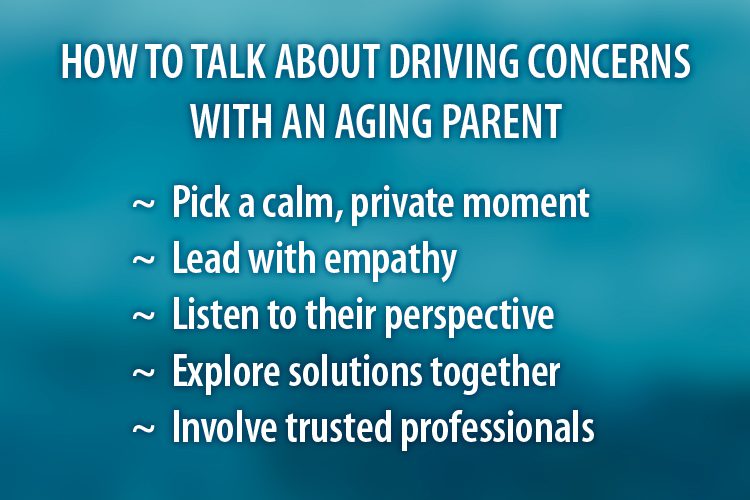 The key is to approach the topic of driving with compassion, not confrontation. Suggesting it may be time to limit or stop driving can feel deeply personal. Yet, addressing safety early and respectfully can prevent accidents and ease tension later on. With empathy, preparation, and open communication, adult children can approach this sensitive topic in a way that protects both the aging parent’s dignity and everyone’s safety.
Pick the right moment
Choose a calm, private time and not immediately after an accident or tense situation. These conversations go better when both parties feel relaxed and heard.
Lead with empathy
Use language that shows compassion and care, such as:
“Dad, I’ve noticed driving has seemed more stressful for you lately. I want to make sure you stay safe and comfortable. Maybe we can explore some other transportation options for you together.
Framing the conversation this way puts the focus on supporting your parent, rather than controlling them.
Listen to their perspective
Make sure they feel safe to express their feelings without judgment. Letting them express their fears or frustrations, while acknowledging how hard the change feels, can help your parent feel respected and not dismissed.
Explore solutions together
If it truly is time for your parent to stop driving, discuss alternatives that support their independence. Local senior ride programs, community shuttles, or ride-sharing apps are all options that can help them maintain their independence. You may also offer to help coordinate transportation or plan outings together.
Involve trusted professionals
Sometimes it helps to hear the recommendation from a doctor, occupational therapist, or driving rehabilitation specialist. Their objective assessment can ease tension and reinforce that the decision is about safety, not control.
Supporting Your Aging Parent After They Stop Driving
Reaching the point where your aging parent stops driving doesn’t mean they have to lose their independence or social life. With encouragement and planning, they can stay active, connected, and fulfilled.

When an aging parent decides to, or needs to, stop driving, it marks a major life transition for both them and their family. Losing the ability to drive can affect a senior’s independence, confidence, and sense of connection to the community. As a caregiver or adult child, you may wonder how to help your parent adjust while ensuring they remain safe, active, and socially engaged.
Understanding the emotional impact of this change and planning practical solutions can make the transition smoother for everyone involved.
Try these strategies to smooth the transition:
- Plan regular visits and social outings to reduce feelings of isolation.
- Research local transportation options for seniors and teach them how to use ride services or apps.
- Encourage community engagement through clubs, volunteer work, or faith-based activities.
- Highlight what they still can do independently, like managing finances, pursuing hobbies, or mentoring others, to reinforce dignity and confidence.
- Consider options such as a senior living community which can offer on-site services and transportation.
If having these conversations and setting up other means of transportation seems too overwhelming, senior living communities can be a great option. Someren Glen is an inclusive and welcoming community where your aging parent can maintain their independence while also having their transportation and other needs met.
Along with additional amenities, Someren Glen offers residents casual and restaurant-style dining options, fitness centers, libraries, a full-service spa and community events on-site. Residents also have access to transportation services to help get to appointments or anywhere else they would like to go.
Helping your parent navigate this transition can be emotional, but it’s also an opportunity to strengthen family bonds and protect their safety. By observing, communicating with empathy, and planning, you’ll know when your parent should stop driving and ensure that this important life change happens with love and respect.