Understanding what qualifies a resident for skilled nursing care can help families determine when a higher level of medical support may be needed. Skilled nursing care provides around-the-clock medical supervision and treatment designed to help older adults maintain or regain important daily skills, based on their individual physical and cognitive needs. Medical care and overall quality of life remain top priorities, with skilled nurses and professional therapists providing consistent care and personalized support.
If your loved one has been injured or is living with a health condition that requires daily medical or therapeutic care, they may benefit from this level of support. There are several important factors to consider when determining whether skilled nursing care is the right next step.

What Is Skilled Nursing Care?
Many assume that skilled nursing care facilities and assisted living communities are the same. While older adults can receive assistance with completing everyday activities in both settings, skilled nursing communities focus on providing treatment services in a secure medical environment with licensed nurses and medical professionals. Alternately, assisted living prioritizes residential services and supports activities of daily living, such as dressing, medication reminders, or meal preparation.
Skilled nursing care provides around-the-clock medical supervision and treatment for those recovering from an injury or continuing health conditions. The team members at skilled nursing communities offer quality medical treatment tailored to each individual’s needs. Skilled nursing includes services such as close monitoring of vital signs, assistance with transfers, medication administration and wound care, as well as physical, occupational and speech therapy.
With both short-term and long-term care, staff will assess each resident’s needs before care and rehabilitation begin to structure treatment and exercises around their goals and current limitations. Nurses monitor the progress made during this time to customize care plans to best suit their recovery process and personal goals and desires.
What Are Common Reasons for Admission to a Skilled Nursing Facility?
The most common reason for admission to a skilled nursing facility is that someone is unable to safely return home and requires daily medical care, supervision, and support during recovery or for a longer-term need.
Recovery is different for everyone, depending on their injuries or mental health. The top priority in a skilled nursing community is providing consistent medical oversight while supporting each resident’s progress through personalized care and treatment.
Skilled nursing care is often needed when older adults require ongoing medical attention following a health event or when managing a more complex condition. Common reasons for admission include:
- Recovery after surgery or hospitalization
- A stroke or cardiac event requiring rehabilitation and monitoring
- An injury or illness that limits independence at home
- Ongoing management of chronic health conditions
Older adults can also benefit from services offered in skilled nursing facilities to improve their mobility or motor, cognitive or speech skills. Residents spend time strengthening their minds and bodies to relearn how to go about their day-to-day lives.
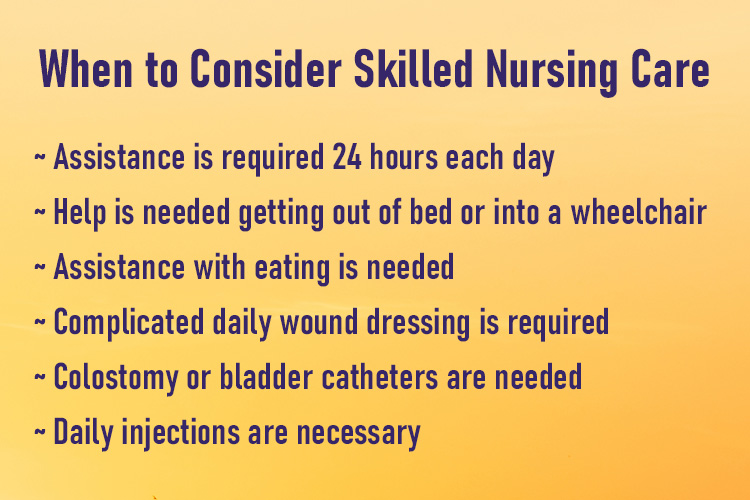
When to Consider Skilled Nursing Care
Your loved one should consider skilled nursing care if they experience the following occurrences:
- Require assistance 24 hours each day
- Need help getting out of bed or transferring to a wheelchair
- Have difficulty eating
- Require complicated daily wound dressings
- Use colostomy or bladder catheters
- Need daily injections
If your loved one would benefit from daily treatment and medical care, trained medical professionals can help care for their physical and mental needs. You may discover that their needs exceed the care you can provide each day. Rest assured that you are not alone on this journey.
Skilled nursing care can provide various treatment options for your family members. While these facilities can offer aid in many forms, the type of service an older adult receives is customized based on their individual needs.
What Qualifies as Skilled Nursing Care for Medicare?
In order to qualify for a short-term rehabilitation stay in skilled nursing care, one must first have a qualifying hospital stay of at least three consecutive midnights. If their physician recognizes the need for skilled nursing care, Medicare can help pay for short-term recovery at a facility. A short-term stay includes up to 100 days of daily treatment from skilled nurses and professional therapists, starting from the first day of admission to the skilled nursing facility.
Qualifications for skilled nursing care under Medicare typically revolve around a resident’s ability to care for themselves and safely return home after treatment at a hospital. Suppose they face challenges with communicating, walking or eating on their own, or require wound care or monitoring of their vital signs. In that case, a physician will likely offer more information about a trusted skilled nursing facility to ensure the resident receives proper rehabilitation to enhance these capabilities during and after recovery.
Services Covered by Medicare
Once your loved one receives the green light for admission to a skilled nursing care facility, assessing the costs of services can be an essential step to consider. Medicare can provide aid in paying for skilled nursing care services for up to 100 days. Your loved one will be eligible to receive treatment with financial assistance for this period of time if their doctor has directly stated their need to receive care from a facility and their recovery is progressing throughout their stay.
Medicare will cover services such as:
- Providing three meals a day
- Administering medications prescribed for individual needs
- Moving into a semi-private room
- Medical equipment provided by the facility
- Physical therapy (depending on individual needs)
- Occupational therapy (depending on individual needs)
- Speech therapy (depending on individual needs)
- Ambulance transportation
- Dietary counseling

Ways to Pay for Long-Term Care
While Medicare will generally not cover long-term care, there are a number of different options available for paying for extended care. Some common ways to pay for long-term skilled nursing care include:
- Private pay, such as personal savings, Long-Term Care Insurance or Life Insurance, retirement funds, or earnings from the sale of a home
- Government programs, such as Medicaid, Veterans’ Benefits, and Social Security Insurance
- Private Assistance, such as support from non-profit organizations or foundations
Does Long Term Care Insurance Pay for Skilled Nursing Care?
Long-term care (LTC) insurance often helps cover skilled nursing care, depending on the details of the policy.
In many cases, coverage includes care provided in a skilled nursing setting, such as daily support, rehabilitation, and services from licensed professionals. Coverage often begins when a physician determines that long-term care is needed and the individual can no longer safely perform certain activities of daily living, such as bathing, dressing, or eating.
Unlike Medicare, which focuses on short-term rehabilitation, LTC insurance is designed to help with ongoing care needs. Because coverage and benefit amounts vary, it is important to review each policy carefully.
What Are the Different Types of Skilled Nursing?
Skilled nursing includes both medical care and rehabilitation services based on each resident’s needs. In addition to nursing support, residents may receive different types of therapy to help improve mobility, strength, communication, and daily living skills.
Common types of skilled nursing rehabilitation include:
- Physical therapy
- Occupational therapy
- Speech therapy
Depending on a person’s health condition and how it affects movement, speech, or daily function, they may participate in one or more of these therapies as part of their care plan.
Physical Therapy in Skilled Nursing
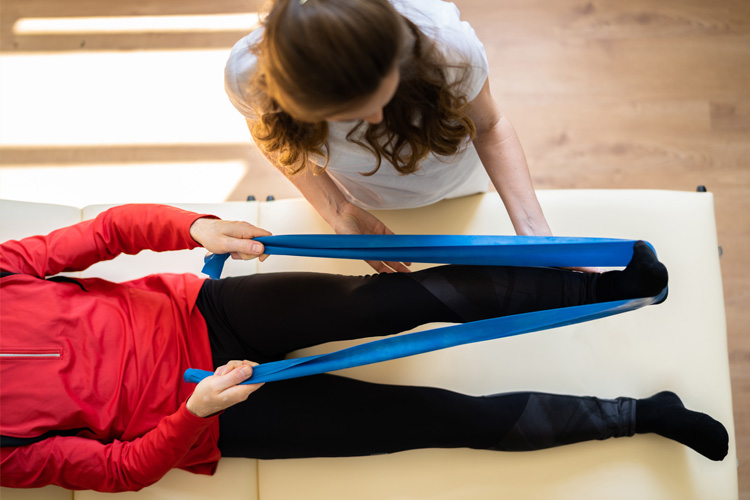
Physical therapy helps residents recover from an injury, surgery, or illness that has limited their mobility. The rehabilitation team will prescribe various physical exercises designed to build strength, improve balance, and make movement easier and safer. This type of care often supports short-term recovery, though the length of therapy depends on each person’s needs and progress.
Occupational Therapy for Seniors
Occupational therapy helps older adults with everyday tasks such as getting dressed, eating, and moving more safely on their own. This therapy supports motor skills, coordination, and independence in daily routines. Occupational therapists (OTs) may also help strengthen cognitive skills through memory-focused activities, coordination exercises, and other mental tasks.
Speech Therapy for Adults
Speech therapy helps older adults who are experiencing speech or language challenges. Older adults who benefit from these practices have health conditions or injuries that limit their speaking abilities. Nurses in this field can also help those who have difficulty swallowing properly.
Communication is a vital skill to have in the later stages of life, and Speech-Language Pathologists take great care to provide exercises to enhance these capabilities over a period of time.
Skilled Nursing Care at Someren Glen
At Someren Glen, we treat your loved one like family. Our skilled nursing care services ensure a comfortable stay and quality rehabilitation for those recovering from surgery, an injury or a health condition.
Someren Glen’s skilled nursing care allows residents to enhance their cognitive and motor skills and receive assistance with everyday activities. Normalcy and companionship are our top priorities for every resident as they begin to rediscover their capabilities through quality rehabilitation.
Assisted and independent living options are available for older adults without the need for around-the-clock medical care. This environment provides opportunities to grow and find new satisfaction in life through physical activities, opportunities to socialize with neighbors and family, trips to the surrounding areas and the peace of mind of nursing and rehabilitation services should the need arise.
Call Someren Glen today to start your loved one’s journey to recovery.